Bread Baking for Beginners: Build a Simple Weekly Loaf Routine
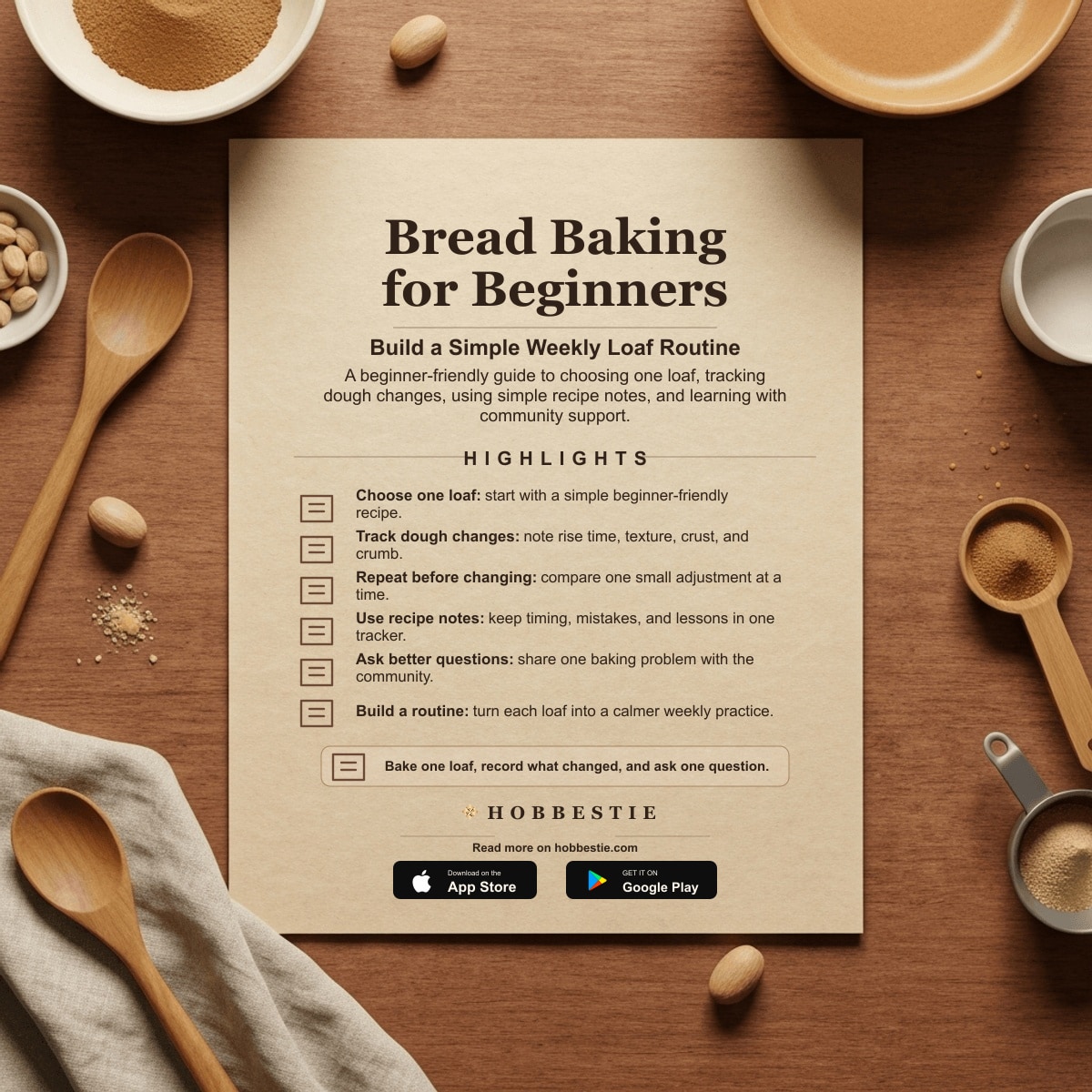
A bread baking for beginners guide should make the first loaf feel possible before it asks you to master every baking term at once. The best first step is simple: choose one beginner-friendly loaf style, follow one trusted method, and write down what happened before you change anything. That gives you a real baseline. Hobbestie is built for this kind of hobby beginning because it pairs digital resources, online learning, and community support, so your first imperfect loaf becomes useful information instead of a private failure.
Why Bread Baking Works as a Beginner Hobby
Start with rhythm, not perfection
Bread baking can look intimidating because people often show the beautiful final loaf and skip the learning curve. Beginners need the opposite. You need a calm rhythm: mix, rest, observe, bake, record, and try again. Once you understand that bread improves through repetition, the hobby becomes less about one perfect result and more about building confidence.
Summer weekends, slower mornings, shared meals, and home routines make bread practice feel social instead of technical. A loaf can become part of a Sunday reset, a dinner plan, or a small gift. The goal is not to become an artisan baker in one week. The goal is to create enough positive evidence that you want to bake again.
Choose one loaf before exploring everything
New bakers often jump between too many recipes. One day it is sandwich bread, the next day it is focaccia, then dinner rolls, then pizza dough. Exploration is fun, but too much switching makes it difficult to understand what changed. Your first theme should be narrow enough to repeat.
Pick one simple loaf category for seven days or two baking sessions. It could be a no-knead loaf, a basic sandwich bread, a small focaccia, or a simple dinner roll. Keep the recipe, timing, and notes in one place. That way, each attempt teaches you something specific.
Build a Seven-Day Starter Routine
Use one tiny baking loop
A beginner routine should fit real life. Try this rhythm: day one, choose your loaf. Day two, save one digital guide or recipe note. Day three, read the process and highlight the confusing parts. Day four, bake your first version. Day five, record what happened. Day six, ask one question in a community. Day seven, decide what to repeat.
For bread baking, a useful weekly loop is to make one loaf, record rise time and texture, then ask one specific troubleshooting question. Did the dough feel sticky? Did it rise slowly? Was the crust too pale? A focused question helps other bakers give better answers.
Track what the dough teaches you
Bread is easier to improve when you track details. Keep notes on room temperature, rest time, dough texture, baking time, crust color, and crumb. You do not need a complicated system. A simple digital tracker, recipe card, or progress journal can show patterns after only a few attempts.
Good tracking also protects you from random recipe-hopping. If you change five things at once, you will not know what helped. If you change one thing and record the result, your learning becomes visible.
Make the second loaf easier than the first
The real beginner milestone is not the first loaf. It is the second one. The second loaf tells you whether your notes were useful and whether the routine felt realistic. Keep one thing the same, change only one small detail, and compare the result. That is how bread baking becomes a calm learning loop instead of a guessing game.
Use Digital Resources Without Overcollecting
Choose resources that support practice
Digital resources should reduce friction, not become another pile of saved links. Start with one or two supports: a recipe tracker, a proofing checklist, a mistake log, a timing template, or a beginner glossary. A template helps you compare attempts. A short online lesson gives sequence. A checklist prevents you from forgetting basic steps.
Avoid saving twenty bread videos before you bake once. The better order is learn, try, record, ask, and repeat. Once you know whether your real problem is timing, texture, shaping, or confidence, you can choose better resources.
Let community replace guesswork
The fastest way to improve is to ask a focused beginner question. Try: "What changed most in your loaf: rise, crust, crumb, or confidence?" That kind of question invites useful replies because it gives people something concrete to respond to.
On Hobbestie, community matters because hobbies are not only about information. They are about momentum. Seeing another beginner's dense loaf, uneven crust, or funny first attempt can make your own learning feel normal. That shared language keeps the hobby alive.
Turn Practice Into Something Useful
Save your beginner process
As you learn, pay attention to the steps you wish someone had explained sooner. Those notes can help the next beginner. You might create a beginner loaf tracker, a proofing checklist, a digital troubleshooting sheet, a short resource list, or a mini tutorial.
You do not need to monetize immediately. First, make the process clear enough that another person could follow it. Recent beginner experience is valuable because experts sometimes forget which details feel confusing at the start.
Keep the first offer small
If you eventually want to share or sell a digital resource, keep the first version narrow. Help someone solve one problem: planning a first loaf, understanding proofing, recording mistakes, or choosing what to try next. A focused resource is easier to finish and easier for another beginner to trust.
Hobbestie supports that path by connecting hobbies, communities, online courses, templates, and digital products in one place. You can begin as a learner, participate as a community member, and later package what you know into something helpful.
Your Next Step
Start bread baking with one loaf, one simple tracker, one digital resource, and one community question. Give yourself seven days or two baking sessions before judging the result. If the routine gives you curiosity, comfort, connection, or confidence, keep building.
Ready to begin? Join Hobbestie to find beginner-friendly communities, online courses, templates, downloadable guides, and digital resources that help your next hobby become easier to start and easier to sustain.