"Bullet Journaling 2026: Why Analog Beats Apps"
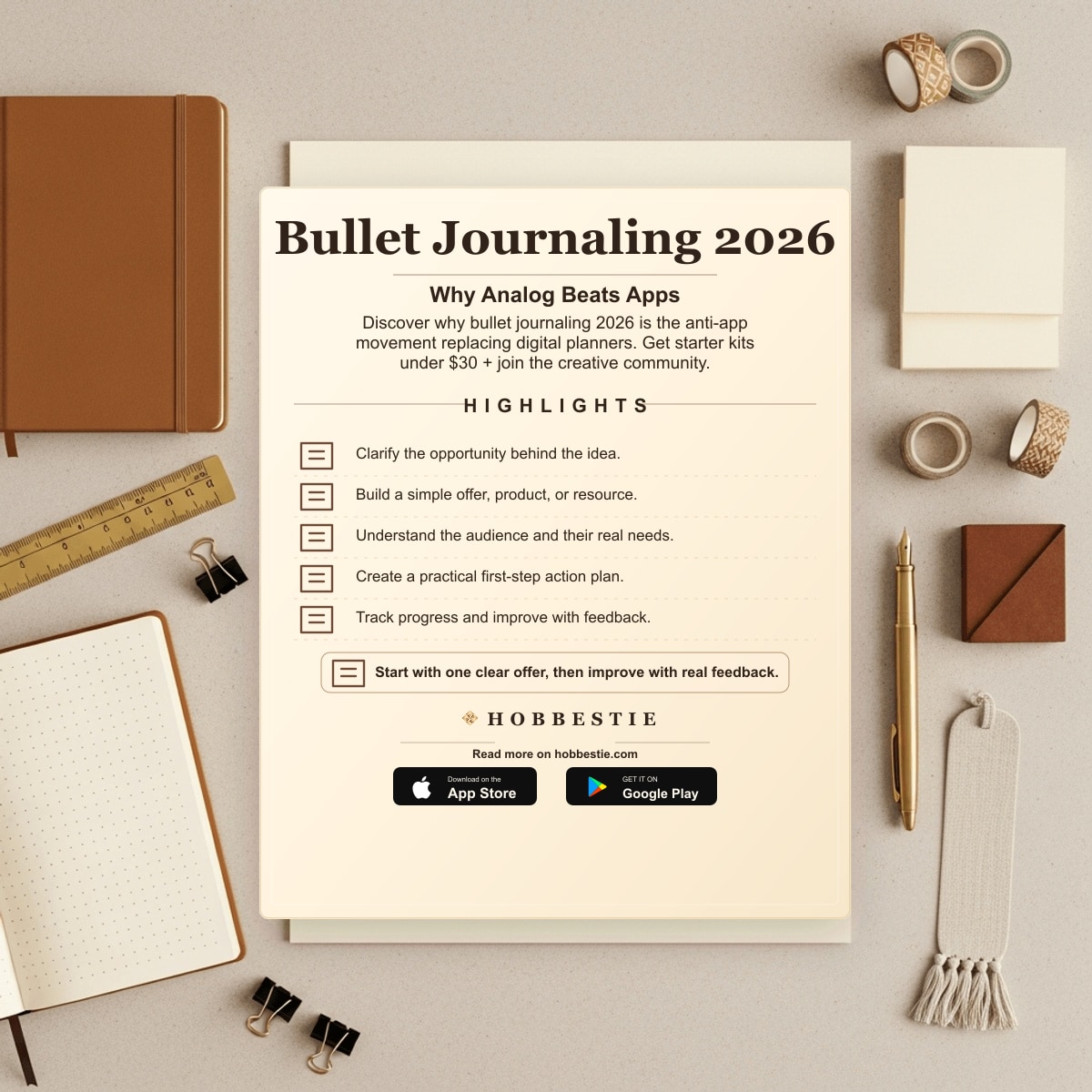
What Makes Bullet Journaling 2026 Different from Digital Planning
The Anti-App Movement: Why Analog Is Winning in 2026
You've tried Notion, Google Calendar, Todoist, and probably a dozen other productivity apps. Yet here you are, still feeling overwhelmed and somehow less organized than before. Welcome to bullet journaling 2026, where the hottest productivity trend isn't an app at all—it's a simple notebook and pen.
The anti-app movement is gaining serious momentum. We're watching professionals and students alike return to analog planning systems that don't require updates, subscriptions, or Wi-Fi. There's something quietly revolutionary about opening a physical notebook instead of another browser tab.
Digital Burnout Is Real (And the Data Proves It)
Recent research shows that 68% of Gen Z actively seeks digital detox journaling solutions for productivity. We're not talking about abandoning technology entirely—just creating space for something that doesn't ping, buzz, or send push notifications.
The numbers tell a compelling story. Handwriting improves memory retention by 34% compared to typing, making your bullet journal setup january ritual more than just aesthetically pleasing—it's scientifically backed brain training. Plus, there are no algorithm changes that suddenly hide your tasks or server crashes that delete your entire week.
The Bullet Journal Method: A Quick Refresher
If you're new to how to start bullet journaling, the core system is beautifully simple. You've got rapid logging (quick notes using bullets, circles, and dashes), migration (moving unfinished tasks forward), and collections (dedicated pages for specific topics). Think of it as a hybrid productivity and creative outlet—not just another task list.
The best part? Zero learning curve compared to mastering yet another app interface. You open to a blank page and start. No tutorials, no premium features locked behind paywalls, and no "update required" messages when you're trying to jot down a brilliant idea.
Getting Started: Your Under-$30 Bullet Journal Starter Kit
The Minimalist Setup (All You Really Need)
Let's bust a myth right now: you don't need fancy supplies to start your analog planning system. The essential trio costs less than a month of most productivity app subscriptions—a dotted notebook ($8-12), a quality pen ($3-8), and a ruler ($2).
That's it. Seriously. You can create an effective bullet journal with these three items and nothing else. The Instagram-perfect spreads with matching washi tape and custom stickers? Totally optional.
Budget-Friendly Supply Recommendations for 2026
For your notebook, look beyond the premium Leuchtturm1917 to eco-friendly alternatives like the Archer & Olive recycled paper journals or the Minimalism Art Classic Notebook. Both offer excellent paper quality for under $15. The Muji gel pens (around $4 for a pack) glide smoothly without bleeding through pages.
Optional additions that keep you under $30 total include a small pack of washi tape for section dividers ($5), basic stickers for habit trackers ($3-6), and a few highlighters ($4-8). Remember, you can always add supplies later as you discover what you actually use.
Free Templates to Copy (No Artistic Skills Required)
Here's your permission slip: imperfect is perfect. Your first spread will probably be messy, the lines might be crooked, and that's exactly the point. You're building a functional tool, not entering an art competition.
The bujo spreads 2026 community has evolved beyond Instagram perfection. You'll find thousands of free downloadable templates and stencils from creators who embrace the "messy middle." Simple weekly spreads with basic boxes work just as well as elaborate artistic layouts. When you join hobby communities on Hobbestie, you'll discover starter layouts shared by people who remember their awkward first attempts and want to help you skip the intimidation.
Building Your 2026 Bullet Journal System
Essential Spreads Every Beginner Needs
Start with four foundational spreads: a month-at-a-glance calendar, weekly spreads for detailed planning, daily logs for rapid capture, and brain dumps for those 2 AM idea explosions. These core pages handle 90% of your planning needs without overwhelming you with options.
Your month-at-a-glance gives you the big picture—deadlines, appointments, and major events. Weekly spreads break down your intentions into manageable chunks. Daily logs capture everything as it happens, and brain dumps clear mental clutter before it becomes anxiety.
Customization Tips for Students vs. Professionals
Student-specific spreads might include assignment trackers with color-coded due dates, exam countdowns that visualize study time remaining, and study hour logs that gamify your learning sessions. One college student on Hobbestie shared how her visual grade tracker motivated her to maintain a 3.8 GPA—seeing those grades fill in felt more rewarding than any app notification.
Professional spreads lean toward project timelines, meeting notes with action items clearly marked, and quarterly goal reviews that align with performance evaluations. Time-blocking works surprisingly better on paper—you can see your entire day without scrolling, making it easier to protect your deep work hours.
Hybrid Approach: When to Use Digital + Analog Together
You don't have to choose between digital detox journaling and mandatory work tools. The hybrid strategy works beautifully: use your bullet journal for creative planning and strategic thinking, then snap photos with your phone to back up important spreads.
Integrate your journal with digital requirements by keeping meeting URLs in your digital calendar while taking handwritten notes in your journal. Your work Slack stays open for real-time communication, but your weekly planning happens offline where you can think clearly. Many users report that habit trackers stick better on paper—there's visceral satisfaction in physically filling in those squares that no app can replicate.
The Bullet Journal Community (And How to Monetize Your Hobby)
Sharing Without the Instagram Pressure
The 2026 bullet journaling community has shifted dramatically from Pinterest-perfect aesthetics to authentic sharing. People post their crossed-out mistakes, coffee-stained pages, and "I gave up on this spread after two days" confessions. It's refreshing, honest, and way more helpful for beginners.
This authenticity opens doors for everyone. You don't need artistic talent to contribute—clarity and functionality matter more than calligraphy. When you host virtual sessions and monetize your expertise on Hobbestie, students book your beginner-friendly sessions specifically because you show the real process, including the messy parts.
Turning Your Spreads Into Side Income
Creators are earning real money selling custom spread templates, printable habit trackers, and digital sticker sets. Pricing strategies that work include template bundles at $5-15 for semester-long planning systems, monthly subscription boxes at $12-25 featuring rotating themes, and individual premium spreads at $3-7.
One Hobbestie creator developed a "Thesis Survival Kit" with research trackers, writing goal spreads, and citation organizers—she's earning $400 monthly selling it to graduate students. Another designed minimalist professional spreads for corporate workers and pulls in $250 monthly with almost zero marketing beyond sharing her own usage.
Virtual Setup Sessions: The New 2026 Side Hustle
Hosting virtual bullet journal setup sessions has become a legitimate side hustle. Beginners will pay $20-50 per session to watch you set up a new month while explaining your choices in real-time. You answer questions, troubleshoot their layouts, and provide personalized recommendations.
The collaborative aspect builds community too. Template swaps let creators cross-pollinate ideas, monthly challenges keep engagement high, and accountability partners help everyone stick with their systems. You can build micro-communities around your specific style—minimalist professional planning, creative artistic spreads, or student-focused productivity systems. The monetization flows naturally when you explore Hobbestie's free and premium features to host these sessions and share resources.
Making It Stick: Bullet Journaling Beyond the First Week
Overcoming the Perfectionism Trap
Here's a sobering statistic: 64% of new bullet journalers quit in week two due to perfectionism paralysis. They spend three hours designing the perfect weekly spread, then feel guilty when life gets messy and their actual week doesn't match their planned aesthetic.
You have permission—right now, from me—to have ugly pages, skip days, and start over without guilt. Scribble out mistakes. Use different pens because you can't find the original. Draw wonky lines. Your journal is a tool that works for you, not a performance piece.
When to Migrate vs. When to Abandon Systems
The 2-minute rule saves your sanity: if setting up a spread takes longer than actually doing the tasks, simplify immediately. That elaborate meal-planning spread with hand-drawn vegetables? Probably overkill. A simple grid with days and meals? Perfect.
Migration best practices include a monthly review ritual where you honestly assess what worked and what didn't. Carry forward the tasks that still matter, and boldly cross out those that don't. Some spreads won't work for you, and that's valuable information, not failure.
Building the Daily Habit (Even When Motivation Fades)
When you fall off the wagon—and you will—recovery is simple: open to today's date and start fresh. No lengthy catch-up required, no guilt-ridden backfilling of empty pages. The beauty of bullet journaling 2026 is that every day offers a new starting point.
Recognize when a spread isn't working by tracking your actual usage. If you haven't touched your water intake tracker in three weeks, it's okay to abandon it. Iteration is the entire point, not achieving perfection on your first try. Connect with accountability partners through hobby communities who understand that consistency matters more than perfection, and progress beats pristine every single time.
Ready to ditch your digital planner for something that actually feels good to use? Join the bullet journaling community on Hobbestie, where over 15,000 analog enthusiasts are sharing templates, hosting virtual setup parties, and turning their planning obsession into side income. Whether you're a complete beginner looking for your first weekly spread or a seasoned journal-er ready to monetize your designs, you'll find your people here. Create your free account today, explore our bullet journaling circles, and discover why the best productivity tool for 2026 doesn't need a charger—just your favorite pen and a little creativity.