Commission Art for Beginners: Spring Start-Up Guide
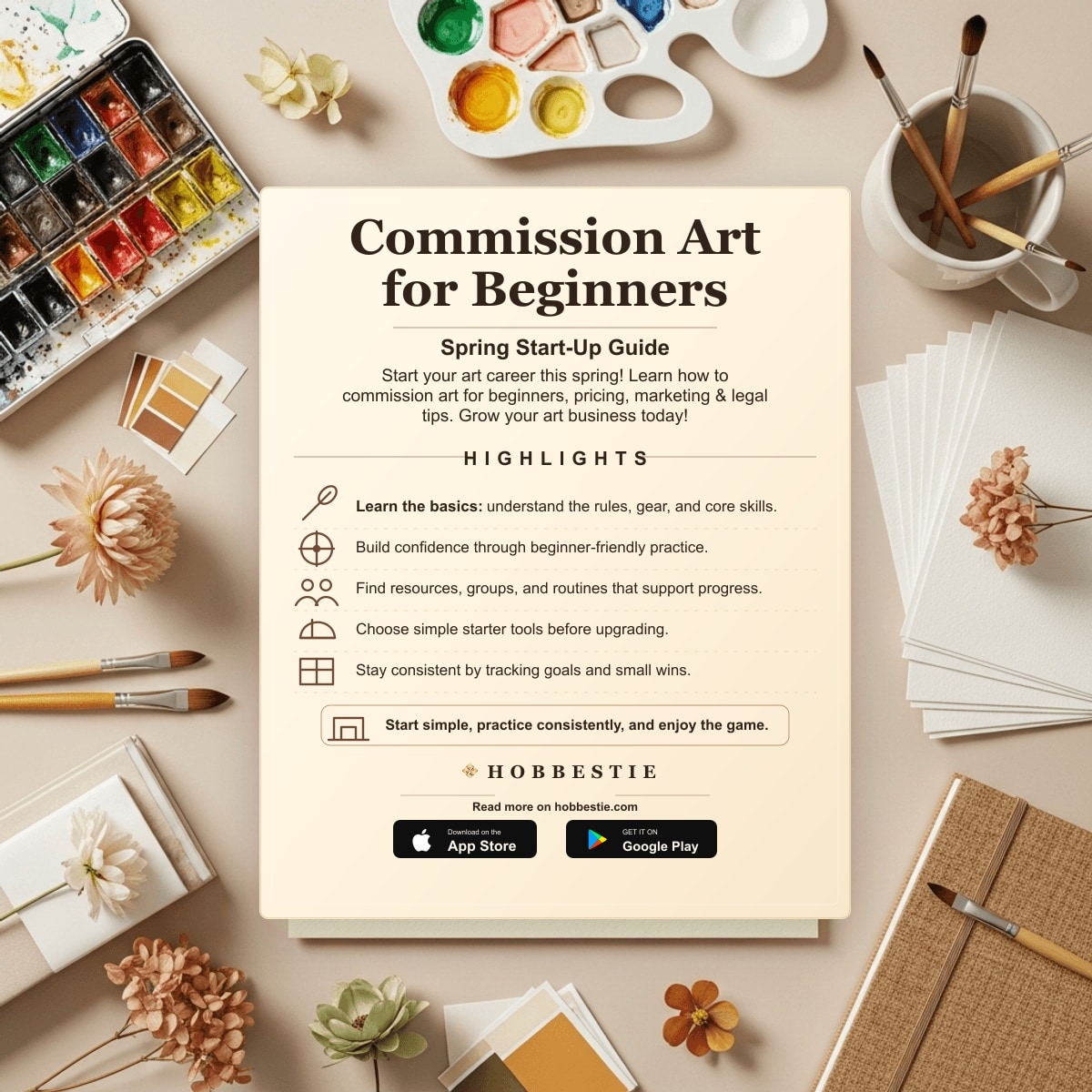
Commission Art for Beginners: Spring Start-Up Guide
Ready to turn your passion for art into a profitable side hustle? This spring is the perfect time to dive into the world of commission art for beginners. Whether you're a digital artist or prefer traditional mediums, this guide will provide you with the essential steps to start offering your artistic talents to clients and earning money doing what you love. We'll cover everything from honing your skills and setting prices to marketing your services and handling the legal aspects of running a freelance art business. So, grab your stylus or brushes, and let's get started!
Section 1: Sharpening Your Skills: Preparing for Commissions
Before you start taking on commissions, it's crucial to refine your skills and create a portfolio that showcases your capabilities. This involves identifying your niche, mastering the tools of your trade, and building a strong online presence. Think of it as laying the foundation for a successful and fulfilling art career. This is your chance to focus on what you enjoy and what people are willing to pay for.
Identifying Your Niche and Style
Explore different art styles and mediums to discover what resonates with you and what's in demand. Do you love creating vibrant character designs, realistic pet portraits, or serene landscape art? Consider specializing in a specific niche to attract a targeted audience. For example, if you enjoy drawing animals, focus on becoming a pet portrait artist. If you're fascinated by fantasy worlds, character design might be your calling. Experiment with different techniques and styles to find your unique artistic voice. Embrace your individuality and let it shine through your work.
Mastering Digital Art Tools
If you're interested in digital art, invest in industry-standard software like Adobe Photoshop, Procreate, or Clip Studio Paint. These programs offer a wide range of tools and features for creating stunning digital artwork. Learn essential techniques like digital painting, sketching, and line art. There are tons of online tutorials and courses available to help you master these tools. Practice regularly and experiment with different brushes, layers, and effects to develop your own unique style. Don't be afraid to explore the software's capabilities and push your creative boundaries.
Building a Strong Portfolio
Create a professional online portfolio showcasing your best work. Platforms like ArtStation, Behance, and your own website are great options for displaying your art. Include a variety of pieces that demonstrate your range and skill level. Showcase your personal style and highlight the types of commissions you're interested in taking on. For instance, if you want to do character design, focus on showing off your best character illustrations. Regularly update your portfolio with new pieces to keep it fresh and engaging. A strong portfolio is your most valuable asset when attracting potential clients.
Section 2: Pricing Your Art: Finding the Sweet Spot
Determining your pricing strategy is a critical step in offering commission art. You need to find a balance between valuing your time and skills while remaining competitive in the market. Underpricing can devalue your work, while overpricing can deter potential clients. Let's explore some key factors to consider when setting your rates.
Calculating Your Hourly Rate
Determine a fair hourly rate based on your skill level, experience, and the cost of living in your area. Research what other artists in your niche are charging to get a sense of the market rate. Consider factors like your education, training, and the demand for your services. Don't be afraid to charge what you're worth, but be realistic about your current skill level. For instance, a beginner might charge $15-$25 per hour, while an experienced artist could command $50 or more. Regularly evaluate your rates as your skills and experience grow.
Considering Complexity and Time
Factor in the time it takes to complete a piece, including sketching, revisions, and final rendering. Consider the complexity of the artwork, such as the number of characters, background details, and level of detail. A simple headshot will naturally take less time than a full-body illustration with a detailed background. Use a time-tracking app to monitor how long it takes you to complete different types of commissions. This will help you accurately estimate your time and price your work accordingly. Remember to factor in time for communication with the client and any revisions they may request.
Offering Different Commission Packages
Offer different commission packages with varying levels of detail and complexity to cater to different budgets. For example, you could offer a basic package with a simple line art drawing, a standard package with a fully colored illustration, and a premium package with a highly detailed painting. Clearly outline what each package includes and the estimated turnaround time. This allows clients to choose the option that best suits their needs and budget. Providing options also makes your services more accessible to a wider range of clients. Be transparent about your pricing and what clients can expect for each package.
Section 3: Marketing Your Art: Reaching Your Target Audience
Marketing is essential for attracting clients and building a successful commission art business. You need to actively promote your services and connect with potential customers. This involves building a social media presence, networking with other artists, and leveraging online marketplaces. Let's explore some effective marketing strategies.
Building a Social Media Presence
Create accounts on platforms like Instagram, Twitter, and TikTok to showcase your art and connect with potential clients. Share high-quality images and videos of your artwork, and engage with your followers. Use relevant hashtags to increase visibility and reach a wider audience. For instance, use hashtags like #commissionart, #digitalart, #artistsoninstagram, and #freelanceartist. Post regularly and interact with other artists and art enthusiasts. Run contests and giveaways to attract new followers and generate excitement. Social media is a powerful tool for building brand awareness and connecting with potential clients.
Networking with Other Artists
Engage with other artists and art communities to build relationships and collaborate on projects. Participate in online art challenges and contests to gain exposure and improve your skills. Leave thoughtful comments on other artists' work and offer constructive criticism. Attend online art events and workshops to network with other professionals. Collaborating with other artists can help you reach a new audience and expand your network. Building relationships with other artists can also provide valuable support and mentorship.
Leveraging Online Marketplaces
Explore online marketplaces like Hobbestie to sell your commission art services. Create a profile that showcases your portfolio, pricing, and terms of service. Actively promote your services and respond to inquiries promptly. Hobbestie provides a platform for artists to connect with clients who are specifically looking for custom artwork. Make sure your profile is professional and highlights your unique skills and style. Regularly update your profile with new pieces and testimonials to attract more clients. Explore the Hobbestie Community and see how other artists are using the platform to grow their businesses.
Section 4: The Legal Side of Commissions: Protecting Yourself
Understanding the legal aspects of commission art is crucial for protecting yourself and your business. This involves creating a commission agreement, understanding copyright and usage rights, and managing payments and refunds. Let's explore some key legal considerations.
Creating a Commission Agreement
Draft a clear and comprehensive commission agreement that outlines the scope of the project, pricing, payment terms, and usage rights. This agreement should protect both you and the client by clearly defining the expectations and responsibilities of each party. Specify the client's rights to use the artwork and any restrictions on commercial use. Include clauses addressing revisions, cancellations, and dispute resolution. A well-written commission agreement can prevent misunderstandings and protect your legal rights.
Understanding Copyright and Usage Rights
Protect your copyright by retaining ownership of the artwork and granting the client a license to use it for specific purposes. This means that you still own the copyright to the artwork, even though the client has commissioned it. Specify the client's rights to use the artwork, such as for personal use, social media promotion, or commercial purposes. Clearly outline any restrictions on the client's use of the artwork, such as reselling or redistributing it. Understanding copyright and usage rights is essential for protecting your intellectual property.
Managing Payments and Refunds
Establish a clear payment schedule and acceptable payment methods (e.g., PayPal, Stripe). Outline your refund policy and procedures for handling disputes or cancellations. Consider using digital contracts that can be signed online. For example, you might require a 50% upfront payment and the remaining 50% upon completion of the artwork. Clearly state your refund policy in your commission agreement. Having a clear payment and refund policy can prevent financial disputes and protect your business.
Section 5: Scaling Your Business: Long-Term Growth
Once you've established a solid foundation, it's time to focus on scaling your business for long-term growth. This involves gathering feedback and improving, creating digital products for passive income, and building a community around your art. Let's explore some strategies for taking your commission art business to the next level.
Gathering Feedback and Improving
Actively seek feedback from clients and peers to identify areas for improvement. Ask clients for testimonials and reviews to showcase your skills and build trust. Continuously refine your skills and experiment with new techniques to stay ahead of the curve. Attend workshops and online courses to learn new skills and stay updated on industry trends. Constructive feedback is invaluable for identifying weaknesses and improving your overall quality.
Creating Digital Products for Passive Income
Create digital products such as art templates, brushes, or tutorials to generate passive income. Sell them on Hobbestie! This allows you to earn money even when you're not actively working on commissions. For example, you could create a set of custom Photoshop brushes for digital painting or a template for creating character designs. You can host virtual webinars and workshops and sell access through Hobbestie. Digital products can provide a steady stream of income and diversify your revenue streams.
Building a Community Around Your Art
Build a community around your art by engaging with your audience, hosting workshops, or creating online courses. Share your knowledge and expertise with aspiring artists. Offer mentorship or coaching services to aspiring artists. Creating a community can help you build brand loyalty, attract new clients, and establish yourself as an authority in your niche. Engage with your followers on social media and respond to their questions and comments. Building a strong community can provide valuable support and opportunities for collaboration. Check out Hobbestie Pricing Plans to learn more about features to help you build your community.
Ready to turn your artistic talent into a thriving business? Join Hobbestie marketplace today and connect with clients eager to commission your unique art! Browse available digital art resources and templates to boost your skills and streamline your workflow. Start your commission art journey now!