"Home Barista for Beginners: Weekend Coffee Upgrade"
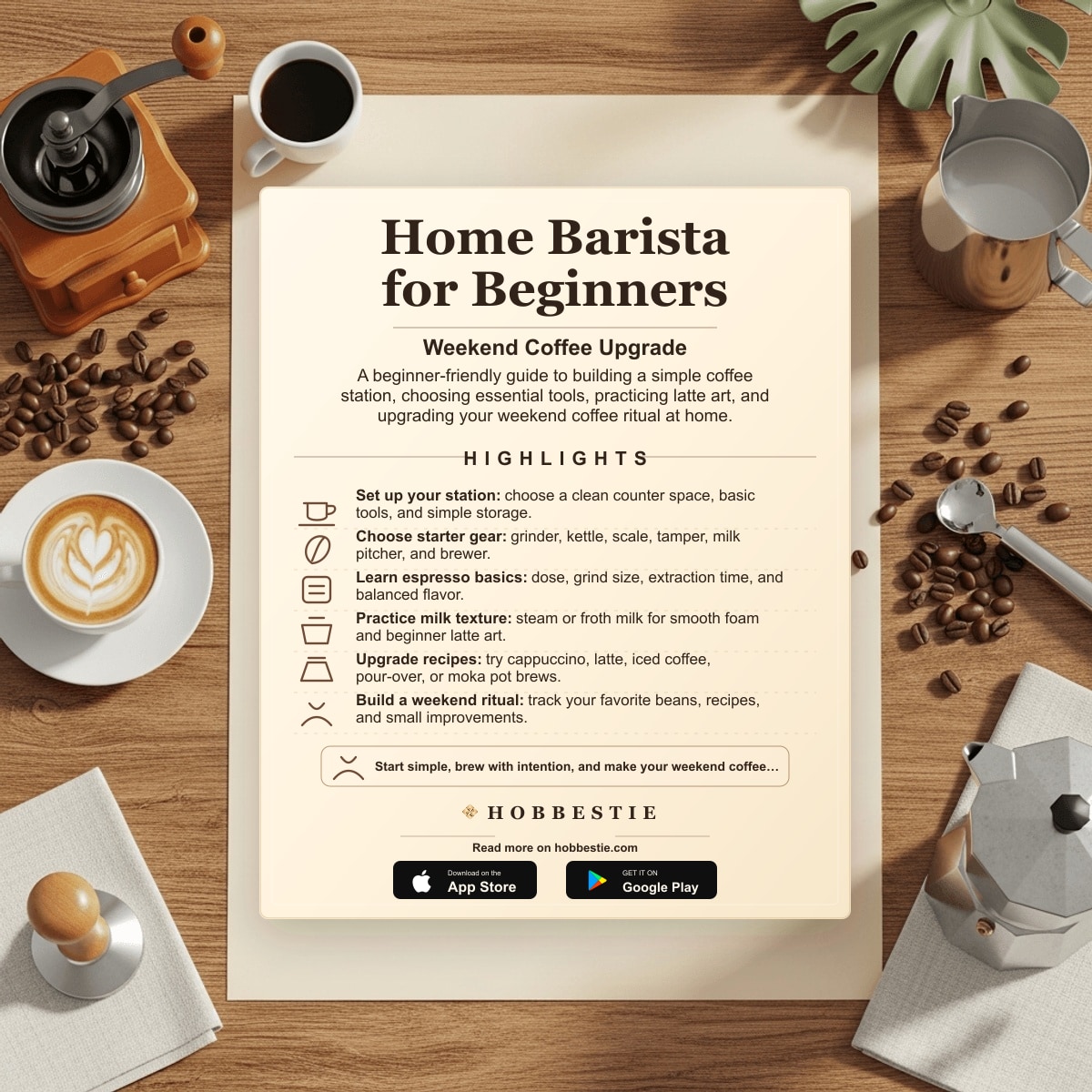
Are you tired of spending a fortune on coffee shop drinks? Do you dream of crafting cafe-quality lattes in your own kitchen? This guide is your ticket to becoming a home barista for beginners, transforming your weekend into a coffee-making adventure. We'll walk you through setting up a budget-friendly home barista setup, mastering essential techniques, and creating impressive latte art. Get ready to ditch the long lines and embrace the joy of brewing your own perfect cup of coffee at home.
Section 1: Setting Up Your Home Barista Station on a Budget
Essential Equipment: What You Really Need
Starting your home barista journey doesn't require breaking the bank. The core of your setup will revolve around how you plan to brew your coffee. An entry-level espresso machine is a good option, offering a taste of authentic espresso. A milk frother is also a must-have for creating creamy lattes and cappuccinos; consider both manual and electric options based on your budget and preference. Finally, a coffee grinder is essential for ensuring a consistent grind size. A burr grinder is recommended for the best results, but blade grinders can work in a pinch.
Budget-Friendly Alternatives
If an espresso machine isn't in your budget right now, don't worry! There are plenty of affordable alternatives that can still deliver delicious coffee. A French press is a classic choice for a rich, full-bodied brew. The Aeropress is another great option for concentrated coffee that can be used in lattes and other drinks. A moka pot, sometimes called a stovetop espresso maker, provides a strong, espresso-like coffee. For frothing milk, consider a manual milk frother; they're inexpensive and easy to use.
Creating Your Workspace
Your home barista station doesn't need to be fancy; it just needs to be functional and organized. Repurpose existing kitchen space, like a corner of your countertop or a small table. Optimize counter space by keeping only essential equipment within reach. Utilize storage solutions like shelves, drawers, and containers to keep coffee beans, syrups, and other supplies organized. This helps maintain a clean and efficient workspace.
Section 2: Mastering the Basics: Espresso Extraction and Milk Steaming
The Art of Espresso: Grind Size and Tamping
Espresso extraction is a crucial skill for any home barista. The grind size plays a significant role in the taste of your espresso. A grind that is too coarse will result in weak, sour espresso. A grind that is too fine will result in bitter, over-extracted espresso. Tamping is equally important, ensuring an even extraction. Use a tamper to compress the coffee grounds firmly and evenly in the portafilter. Aim for about 30 pounds of pressure. A properly extracted shot should take around 25-30 seconds.
Milk Steaming 101: Texture and Temperature
Creating perfectly steamed milk is key to crafting delicious lattes and cappuccinos. The goal is to achieve microfoam, a velvety texture with tiny, uniform bubbles. Start by positioning the steaming wand just below the surface of the milk. Introduce air to create the foam, then lower the wand to heat the milk. The ideal temperature is around 140-160°F (60-70°C). Avoid overheating, which can scald the milk and ruin the flavor. You can use a thermometer or simply feel the pitcher; it should be hot but not scalding.
Troubleshooting Common Issues
Even experienced baristas encounter problems from time to time. Sour espresso is often caused by under-extraction, which can be due to a grind that is too coarse or insufficient tamping. Bitter espresso is usually the result of over-extraction, which can be caused by a grind that is too fine or excessive tamping. Thin or overheated milk can be caused by improper steaming technique or overheating the milk. Adjust your grind size, tamping technique, and steaming technique to address these issues. Don't be afraid to experiment and practice!
Section 3: Easy Coffee Recipes to Impress Your Friends
Classic Latte: The Foundation
The classic latte is a simple yet satisfying drink that forms the foundation for many other coffee creations. Start by pulling a double shot of espresso (about 2 ounces). Steam your milk to create a velvety microfoam. Pour the steamed milk into the cup, holding back the foam with a spoon. Then, release the foam on top to create a layer of foam. The ratio of espresso to milk is typically 1:3 or 1:4. Experiment with different ratios to find your preferred balance.
Cappuccino: A Timeless Favorite
The cappuccino is another classic coffee drink that's easy to make at home. The key difference between a latte and a cappuccino is the foam-to-milk ratio. A cappuccino has a more distinct layer of foam. Prepare a double shot of espresso. Steam your milk, creating a generous amount of foam. Pour the milk into the cup, ensuring a thick layer of foam on top. Dust the foam with cocoa powder for an extra touch of flavor and visual appeal. The ideal ratio is 1/3 espresso, 1/3 steamed milk, and 1/3 foam.
Iced Coffee Creations: Cold Brew and More
Iced coffee is a refreshing alternative to hot coffee, especially during warm weather. Cold brew is a popular method for making iced coffee. It involves steeping coffee grounds in cold water for 12-24 hours. This results in a smooth, less acidic concentrate. To make an iced latte, combine cold brew concentrate with milk and ice. Add sweeteners or flavorings to taste. Consider experimenting with different flavor combinations, such as vanilla, caramel, or chocolate. You can also add a splash of cream or whipped cream for extra indulgence.
Section 4: Latte Art for Beginners: Simple Designs to Start With
The Heart: A Classic Introduction
Latte art is a fun and impressive way to elevate your home coffee creations. The heart is a simple design that's perfect for beginners. Start by pouring the steamed milk into the center of the espresso, holding the pitcher close to the surface. As the cup fills, lift the pitcher and increase the milk flow. When the cup is almost full, quickly pull the pitcher through the foam, creating a heart shape. Practice makes perfect, so don't be discouraged if your first few attempts aren't perfect.
The Rosetta: Taking it to the Next Level
The rosetta is a more advanced latte art design that requires a bit more practice. Start by pouring the milk into the center of the espresso, creating a base. Then, wiggle the pitcher back and forth as you pour, creating a series of overlapping lines. As the cup fills, lift the pitcher and increase the milk flow. When the cup is almost full, pull the pitcher through the design, creating the rosetta shape. Controlling the milk flow is key to achieving a beautiful rosetta.
Practice Tips and Resources
Latte art takes time and practice to master. Don't be afraid to experiment with different techniques and milk consistencies. Watch video tutorials to learn from experienced baristas. Download Latte Art Templates from Hobbestie to guide your practice. Focus on improving your pouring technique, milk steaming skills, and design execution. Consistent practice will help you develop the muscle memory and coordination needed to create impressive latte art.
Section 5: Maintaining Your Equipment for Long-Lasting Performance
Daily Cleaning Routines
Proper maintenance is essential for keeping your home barista equipment in top condition. Daily cleaning routines are crucial for preventing buildup and ensuring optimal performance. Backflush your espresso machine after each use to remove coffee grounds and oils. Clean your milk frother immediately after each use to prevent milk residue from hardening. Wipe down all surfaces and equipment to keep your workspace clean and sanitary. A little daily maintenance goes a long way.
Deep Cleaning and Descaling
In addition to daily cleaning, deep cleaning and descaling are necessary for maintaining your equipment over the long term. Descale your espresso machine regularly to remove mineral buildup, which can affect the machine's performance. Clean your coffee grinder periodically to remove coffee oils and residue. Refer to your equipment's manuals for specific instructions on deep cleaning and descaling. Regular deep cleaning will help extend the life of your equipment.
Troubleshooting and Repairs
Even with proper maintenance, you may encounter problems with your equipment from time to time. Consult your equipment's manuals for troubleshooting tips. Search online forums and communities for solutions to common problems. If you're unable to resolve the issue yourself, consider seeking professional servicing. Regular servicing can help prevent major repairs and extend the life of your equipment. Remember that Hobbestie also has some great Online Coffee Courses to help you learn more about maintenance.
Ready to elevate your home coffee game? Download digital barista guides, Latte Art Templates, and Online Coffee Courses from Hobbestie marketplace to take your skills to the next level. Start crafting cafe-quality coffee at home today!