How to Start Vintage Computer Restoration: Beginner Guide
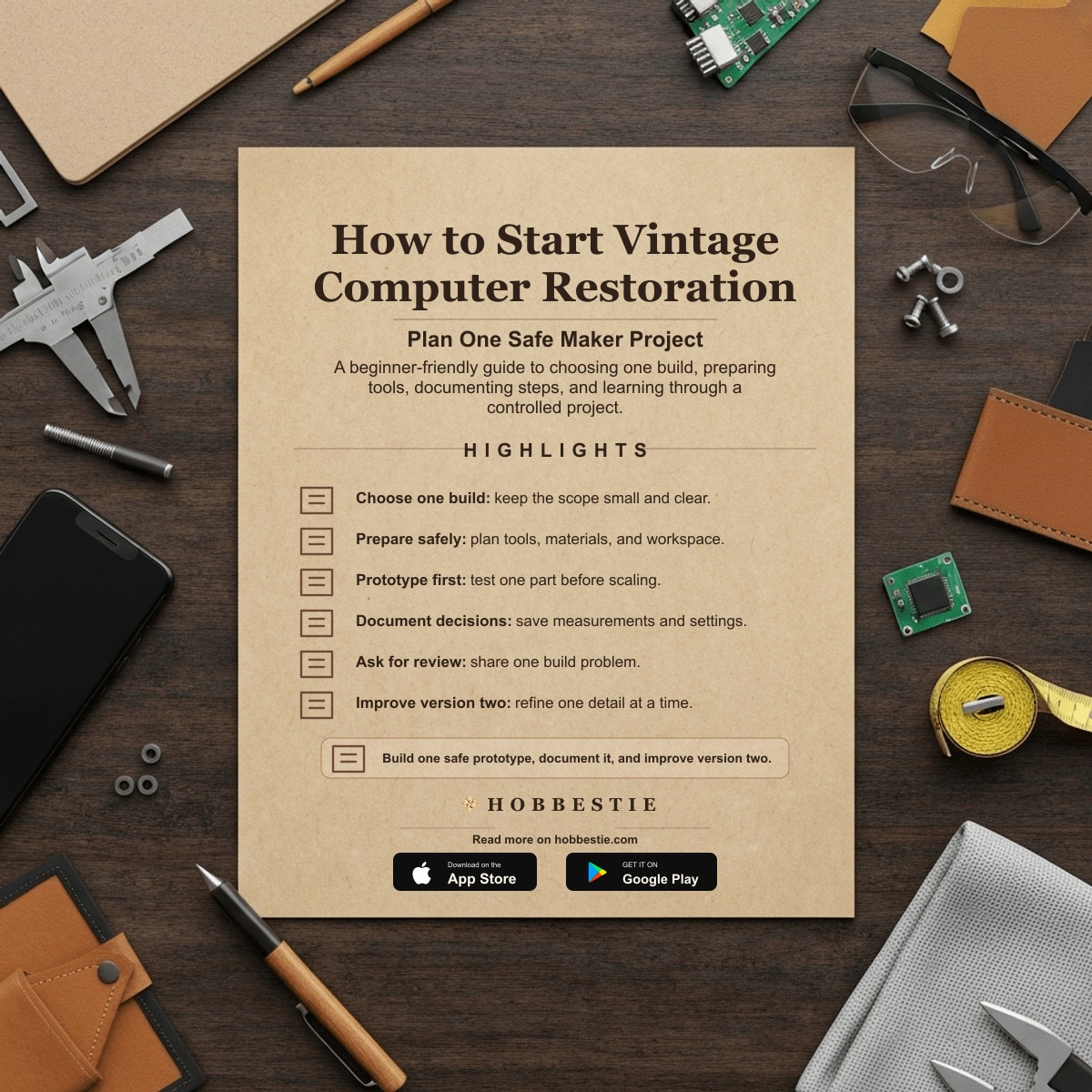
A vintage computer restoration for beginners guide should help you begin without turning curiosity into pressure. Start small: choose one small vintage computer restoration action and document what felt clear, confusing, and repeatable. That gives you one real experience, one useful note, and one reason to continue. Hobbestie works well for this stage because it connects learning, community, templates, online courses, and digital resources without making the first step feel too formal.
Why Vintage Computer Restoration Works as a Beginner Hobby
Begin with one repeatable loop
Beginners usually do not need a complicated plan. They need one loop they can repeat when life is normal, busy, or imperfect. For vintage computer restoration, that loop can be simple: learn one idea, try one small action, record what happened, then ask one better question.
Summer - Peak outdoor activities, travel hobbies. This topic keeps the content calendar moving with a supported Hobbestie hobby when live AI research is unavailable. The seasonal timing matters because hobbies stick more easily when they connect to routines you already have. A walk, weekend hour, quiet evening, or shared conversation can become the container for practice.
Keep the first goal narrow
A narrow first goal keeps the hobby friendly. Instead of trying to understand the whole category, choose one theme, one skill, one prompt, or one type of result. You can expand later after you know what part of the practice gives you energy.
Use a beginner filter: can you explain the next step in one sentence? If yes, it is probably small enough. If not, reduce it until the action feels clear.
Build a Seven-Day Starter Routine
Use tiny repeatable actions
Your first week should prove that the hobby can fit your life. Try this rhythm: day one, choose your focus. Day two, save one guide or template. Day three, try one short practice. Day four, document what happened. Day five, ask one community question. Day six, repeat the easiest action. Day seven, decide what you want to keep.
For vintage computer restoration, a useful weekly loop is to practice one small vintage computer restoration step, save one lesson note, and ask one focused community question. This gives you progress without turning the hobby into homework.
Track what you notice
Documentation is what turns a beginner attempt into learning. Keep notes on what worked, what felt confusing, what you want to try again, and what question keeps repeating. A simple digital tracker can hold photos, links, dates, prompts, mistakes, and tiny wins.
Good tracking also protects you from the all-at-once trap. Instead of collecting too many tabs or ideas, keep one home base: a Hobbestie resource, a notes app, a template, or a community thread.
Use Digital Resources Without Overcollecting
Choose resources that make action easier
Digital resources should reduce friction. Start with one or two supports such as a beginner checklist, practice tracker, lesson notes template, resource list, progress journal. A template gives structure. A short lesson gives sequence. A checklist lowers the chance that you forget the basics. A community prompt gives you a reason to share before you feel fully ready.
Avoid saving twenty resources before practicing. The better order is learn, try, record, ask, and repeat. Once you know what part of the hobby you enjoy, you can add more specific resources with confidence.
Let community replace guesswork
The fastest way to feel less alone is to ask a focused beginner question. Try: "What is the first vintage computer restoration question you wish someone answered simply?" A question like that invites examples, stories, and practical advice instead of vague encouragement.
On Hobbestie, community matters because hobbies are not only about information. They are about belonging, momentum, and shared language. Seeing another person's imperfect start can make your own first step feel normal.
Turn Practice Into Something Useful
Save your beginner process
As you learn, notice the steps you wish someone had explained sooner. Those notes can help the next beginner. You might create a beginner vintage computer restoration checklist or digital practice tracker, a short resource list, a mini tutorial, or a simple checklist.
You do not need to monetize immediately. First, make your process clear enough that another person could follow it. That is often where a hobby starts becoming part of a larger creative life.
Keep the first offer small
If you eventually want to share or sell a digital resource, keep the first version narrow. Help someone complete one task, understand one concept, or start one routine. A focused resource is easier to finish and easier for another beginner to trust.
Hobbestie supports that path by connecting hobbies, communities, online courses, templates, and digital products in one place. You can begin as a learner, participate as a community member, and later package what you know into something helpful.
Your Next Step
Start vintage computer restoration with one theme, one tiny practice session, one digital resource, and one community question. Give yourself seven days before judging the result. If the routine gives you curiosity, calm, connection, or confidence, keep building.
Ready to begin? Join Hobbestie to find beginner-friendly communities, online courses, templates, downloadable guides, and digital resources that help your next hobby become easier to start and easier to sustain.