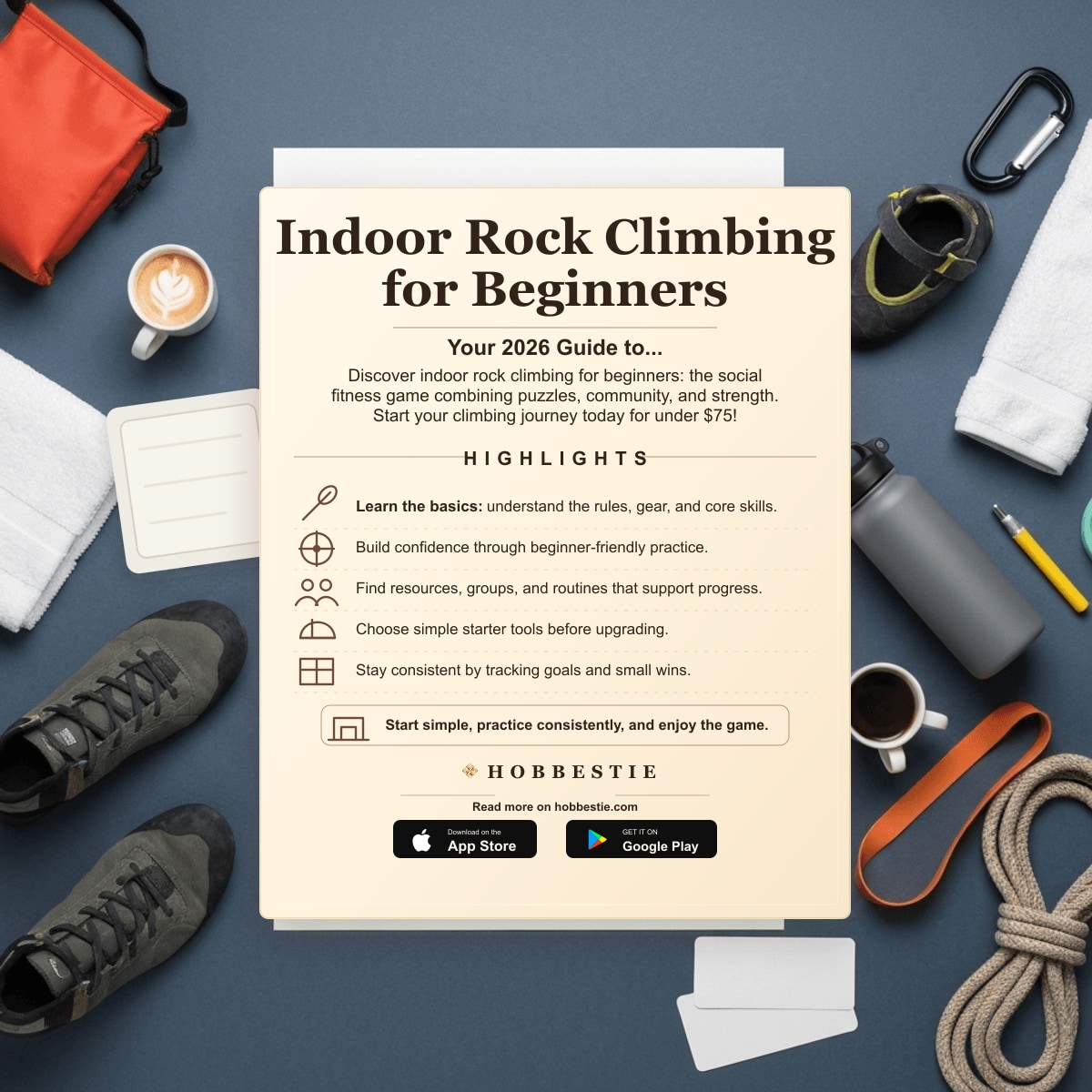
"Indoor Rock Climbing for Beginners: Your 2026 Guide to..."
Why Indoor Rock Climbing Is the Ultimate Social Fitness Game
If you're tired of the isolating treadmill grind and looking for something that feels more like play than punishment, indoor rock climbing for beginners might be your perfect match. Imagine a fitness activity that combines the problem-solving satisfaction of your favorite puzzle game with the supportive energy of a team sport, all while building serious strength. That's exactly what climbing delivers, and it's why millennials and Gen Z are ditching traditional gyms for climbing walls in record numbers.
The Puzzle-Solving Dopamine Loop
Climbing routes function like video game levels, complete with color-coded difficulty ratings that make progression incredibly satisfying. The V-Scale grading system for bouldering starts at V0 for beginners and extends to V17 for elite climbers, giving you clear achievement markers as you improve. Each route presents a unique physical puzzle requiring spatial reasoning, strategy, and creative movement—not just brute strength. You'll find yourself studying holds, planning sequences, and experiencing genuine eureka moments when you finally crack a challenging problem.
The beauty of bouldering near me searches is that most cities now have multiple gyms offering these puzzle-like challenges. Every successful climb, called a "send" in climbing lingo, triggers a dopamine hit similar to leveling up in a game. You get instant feedback on your performance, can immediately retry failed attempts, and watch your skills improve session by session.
Community Culture vs. Gym Intimidation
Unlike traditional gyms where everyone works in isolation with headphones on, climbing gyms foster naturally collaborative environments. Strangers regularly offer "beta" (route advice), cheer for your attempts, and celebrate your sends like they're their own victories. This community-first culture makes climbing one of the least intimidating fitness activities you'll ever try, even if you're starting from zero athletic background.
The social dynamics happen organically because everyone's working on visible problems together. You'll watch someone tackle a route you're struggling with, pick up techniques, and then share what worked when someone else asks. This collaborative problem-solving creates friendships faster than any forced gym buddy system ever could.
Accessible Entry Point: Under $75 to Start
One of the biggest barriers to trying new hobbies is the startup cost, but how to start rock climbing won't break your budget. A gym day pass typically costs $15-25, and shoe rentals run $5-10, meaning your first session costs less than a nice dinner out. Most gyms provide chalk, and you don't need any other equipment to start bouldering.
If you fall in love with climbing after a few sessions, monthly memberships average $50-80 depending on your location—comparable to traditional gym memberships but infinitely more engaging. There's no intimidating equipment knowledge required, no complicated machines to figure out, and no judgment about your fitness level. You just need rental shoes, some chalk for grip, and the willingness to try.
Understanding Bouldering vs. Top-Rope Climbing for Beginners
When you're researching bouldering vs rock climbing, you'll discover these are actually two different approaches to the same sport, each with distinct advantages for beginners.
Why Bouldering Is Perfect for First-Timers
Bouldering involves climbing shorter walls, typically 12-15 feet high, with thick crash pads below to cushion falls. The game-changing advantage? No ropes, no harnesses, and no partner required for solo sessions. You can show up alone, work on problems at your own pace, and leave whenever you want. This independence makes bouldering ideal for people with unpredictable schedules or those who feel awkward coordinating with strangers.
Top-rope climbing, by contrast, requires a belayer (the person managing your safety rope), a harness, and knowledge of rope systems. While top-rope climbing is fantastic once you've built confidence and found reliable climbing buddies, it adds complexity that can feel overwhelming on day one. Most beginners start with bouldering and transition to rope climbing after they've developed basic movement skills and gym friendships.
Bouldering also allows more attempts per session, leading to faster skill progression. Instead of spending time getting harnessed and setting up ropes, you're constantly moving and learning. The immediate social interaction as you watch others and share beta accelerates your improvement dramatically.
The Route Reading Art: Holds, Angles, and Beta
Route reading transforms climbing from random scrambling into strategic movement. Before touching the wall, experienced climbers study the sequence like chess players analyzing a board. You'll learn to identify different hold types: jugs (large, easy grips), crimps (tiny edges), slopers (rounded holds requiring open-hand grip), and pinches (holds you squeeze between thumb and fingers).
Foot placement matters even more than hand holds—beginners typically over-rely on arm strength while experienced climbers push through their legs. Analyzing body positioning, hip rotation, and movement sequence before attempting a route is called "reading the beta." This mental engagement is what makes climbing feel meditative, pulling you into a flow state where nothing exists except the present movement.
Many climbers describe this focus as active mindfulness, similar to meditation but more accessible for people who struggle sitting still. Your mind can't wander when you're three moves into a challenging sequence, making climbing an effective stress-relief tool for anxious overthinkers.
Grading Systems Decoded (V-Scale and Beyond)
The V-Scale grading system provides clear progression markers: V0-V2 routes are beginner-friendly, V3-V5 represent intermediate challenges, and V6+ enters advanced territory. However, grades vary significantly between gyms and regions—a V3 at one gym might feel like a V4 elsewhere. Don't get too hung up on numbers early on.
Most gyms use color-coding to make progression visual and satisfying, similar to earning belts in martial arts. You might start on yellow routes (V0-V1), progress to green (V2-V3), then blue, red, and beyond. This visual system provides motivation and makes it easy to track improvement over weeks and months. The satisfaction of sending your first route in a new color rivals any fitness achievement you've experienced.
Your First Climbing Session: What to Expect and How to Prepare
Knowing what to expect removes anxiety and helps you maximize your first experience with these essential rock climbing gym tips.
What to Wear and Bring
Wear comfortable athletic clothing that allows full range of motion—think yoga pants, athletic shorts, or joggers rather than baggy jeans. You'll be lifting your legs high and twisting your body in unexpected ways, so restrictive clothing will frustrate you quickly. A fitted t-shirt or tank top works better than loose shirts that bunch up.
Rental climbing shoes will feel uncomfortably tight compared to street shoes, and that's completely normal. They should be snug without causing pain—think firm hug rather than torture device. This tightness allows precise foot placement on small holds and prevents your foot from sliding inside the shoe. Your feet might feel cramped at first, but you'll take breaks between attempts anyway.
Bring a water bottle, a small towel for wiping sweat, and optional liquid chalk if you have sweaty hands. Most gyms provide communal chalk, but some climbers prefer their own. Don't bring gloves—climbing requires direct contact with holds for proper grip and technique development.
Gym Etiquette and Safety Basics
The most important safety rule: never walk under active climbers. The fall zone extends several feet from the wall base, and climbers might jump down unexpectedly. Always look up before crossing near walls, and communicate with others sharing your space. If you're spotting a friend on a challenging move, position yourself to guide their fall toward the pad center rather than trying to catch them.
Warm up properly with easy routes and dynamic stretching before attempting harder problems. Climbing injuries often result from inadequate preparation—cold tendons and muscles are vulnerable to strains. Spend 10-15 minutes on V0 routes and gentle stretching before pushing your limits.
Expect forearm pump (intense muscle fatigue) to hit quickly during your first session. This burning sensation in your forearms is the biggest beginner limitation, not overall strength or skill. It's caused by gripping too hard and improves dramatically with practice as you learn to relax your grip and climb more efficiently.
Setting Realistic First-Day Goals
A successful first session means completing 5-10 V0-V1 routes, learning basic movement patterns, and leaving excited rather than exhausted. Don't try to climb for three hours straight—quality beats quantity when you're building foundational technique. Most beginners benefit from 60-90 minute sessions with plenty of rest between attempts.
Take advantage of free orientation sessions or beginner classes that most gyms offer. These teach proper falling technique (landing on your feet, rolling backward onto the pad), basic movement concepts, and gym-specific rules. Learning to fall safely removes fear and allows you to push yourself appropriately. Staff members are typically passionate climbers who love helping newcomers—don't hesitate to ask questions.
Building Your Climbing Skills: Technique Over Strength
The beautiful secret about climbing: technique trumps raw strength every time, making it accessible regardless of your current fitness level.
Essential Beginner Techniques to Master First
Footwork is everything in climbing, yet beginners instinctively over-rely on arm strength. Your legs are significantly stronger than your arms, so focus on precise foot placement and pushing through your legs rather than pulling with your arms. Watch experienced climbers and notice how deliberate their foot movements are—every placement is intentional.
Practice "quiet feet" by placing your feet deliberately rather than scraping and adjusting, which wastes energy and indicates poor planning. Key techniques to learn early include straight-arm climbing (keeping arms extended to conserve energy), flagging (extending one leg as a counterbalance), drop knee (rotating your hip to reach distant holds), and heel hooks (using your heel on holds for leverage).
These techniques feel awkward initially but become intuitive with practice. Join Hobbestie's climbing community to connect with experienced climbers who can demonstrate these movements and provide personalized feedback. Many climbers love sharing knowledge and helping beginners develop proper technique from the start.
The Mental Game: Fear, Failure, and Growth Mindset
Climbing forces confrontation with fear and failure in a controlled, supportive environment—making it a powerful personal growth tool beyond physical fitness. You'll regularly attempt routes that feel impossible, fall repeatedly, and slowly piece together the solution. This process builds resilience and growth mindset in ways that transfer to other life areas.
The climbing community celebrates "working a project" (repeatedly attempting a challenging route over days or weeks). Failure isn't just normalized—it's expected and respected. You'll hear climbers casually discuss routes they've attempted 20+ times, and nobody judges the struggle. This culture shift from traditional fitness (where struggling feels embarrassing) to climbing (where struggle is the point) is incredibly liberating.
Browse digital climbing guides and tutorials to study technique between sessions and accelerate your learning. Watching video breakdowns of movement patterns helps your brain process the physical challenges you're experiencing. Many climbers find that mental rehearsal and visualization significantly improve their performance.
Cross-Training and Injury Prevention
Climbing develops pulling muscles intensely, so training antagonist muscles prevents imbalances and injuries. Incorporate push-ups, dips, and shoulder presses to balance all the pulling. Wrist stretches and shoulder stability exercises are crucial for long-term climbing health—these small joints handle significant stress.
Yoga and flexibility work complement climbing perfectly, improving body awareness, balance, and range of motion. Many climbers integrate both practices, finding that yoga's mindfulness aspects enhance their route reading and mental game. Flexibility allows you to use holds in creative ways and reach positions that would be impossible with tight hips and shoulders.
Explore online climbing courses that cover injury prevention, training protocols, and technique refinement. Investing in education early prevents developing bad habits that limit your progression later. The climbing community values continuous learning, and quality instruction accelerates improvement dramatically.
Finding Your Climbing Community and Sustaining the Hobby
Climbing's social nature is what transforms it from occasional activity into lifestyle hobby for most people.
Making Climbing Friends and Finding Partners
Most climbing gyms have bulletin boards, Facebook groups, and organized meetups specifically for finding partners and making friends. Many gyms host social events, competitions, and themed climbing nights that facilitate connections. The activity naturally breaks the ice—asking for beta or offering encouragement starts conversations effortlessly.
Don't feel awkward showing up alone. Solo climbers are common, and the community expects and welcomes newcomers. Position yourself near routes you're working on, and you'll naturally interact with others attempting the same problems. Shared struggle creates bonds quickly, and you'll likely exchange names and contact information after a few sessions with the same people.
Join online communities and forums where climbers share experiences, training resources, and local gym recommendations. Reddit's climbing communities, Mountain Project forums, and gym-specific Discord servers provide valuable information and connection opportunities. Digital platforms complement in-person climbing by helping you find mentors, gear swap opportunities, and climbing trip partners.
Tracking Progress and Staying Motivated
Use climbing apps like Mountain Project, Kaya, or 27 Crags to log your sends, track progression, and set goals. This gamification maintains motivation during plateaus, which every climber experiences. Seeing your logbook fill with completed routes provides tangible evidence of improvement, even when progress feels slow.
Access digital climbing journals and progress tracking templates to document your journey and identify improvement areas. Note which hold types challenge you, what movement patterns feel awkward, and which routes you're projecting. This data-driven approach helps you target weaknesses and celebrate strengths. Many climbers find that journaling enhances their problem-solving skills and accelerates progression.
Set process goals ("climb three times this week") rather than outcome goals ("send a V4 by next month") to maintain sustainable motivation. Climbing progression isn't linear—you'll have breakthrough sessions and frustrating plateaus. Focusing on consistent practice and technique refinement keeps you engaged through the inevitable ups and downs.
Transitioning from Gym to Outdoor Climbing
Many climbers transition to outdoor bouldering and sport climbing after 6-12 months of gym experience. Outdoor climbing requires additional education about safety, environmental ethics, and route finding, but the movement skills transfer seamlessly. Winter indoor climbing naturally leads to summer outdoor adventures, creating a year-round hobby that connects you with nature.
Enroll in online courses about outdoor climbing safety, anchor building, and Leave No Trace principles before making the transition. Outdoor climbing involves real risks that gym climbing doesn't, so proper education is essential. Many gyms offer outdoor transition classes that teach these skills in controlled environments before you venture to real rock.
Connect with experienced outdoor climbers through your gym community before heading outside. Having mentors who know local areas, understand safety systems, and can teach outdoor-specific skills makes the transition safer and more enjoyable. The climbing community generally embraces teaching newcomers, especially those who approach learning with humility and respect for the environment.
Ready to Start Your Climbing Journey?
Ready to start your climbing journey and connect with a community that gets it? Join Hobbestie's climbing community to access exclusive digital training guides, downloadable technique tutorials, and progress tracking templates designed specifically for beginners. Connect with local climbing buddies, share your sends, and discover online courses that'll accelerate your progression from nervous first-timer to confident climber. Your first V0 send is waiting—let's make it happen together.