Salsa Dancing for Beginners: Start with Rhythm and Confidence
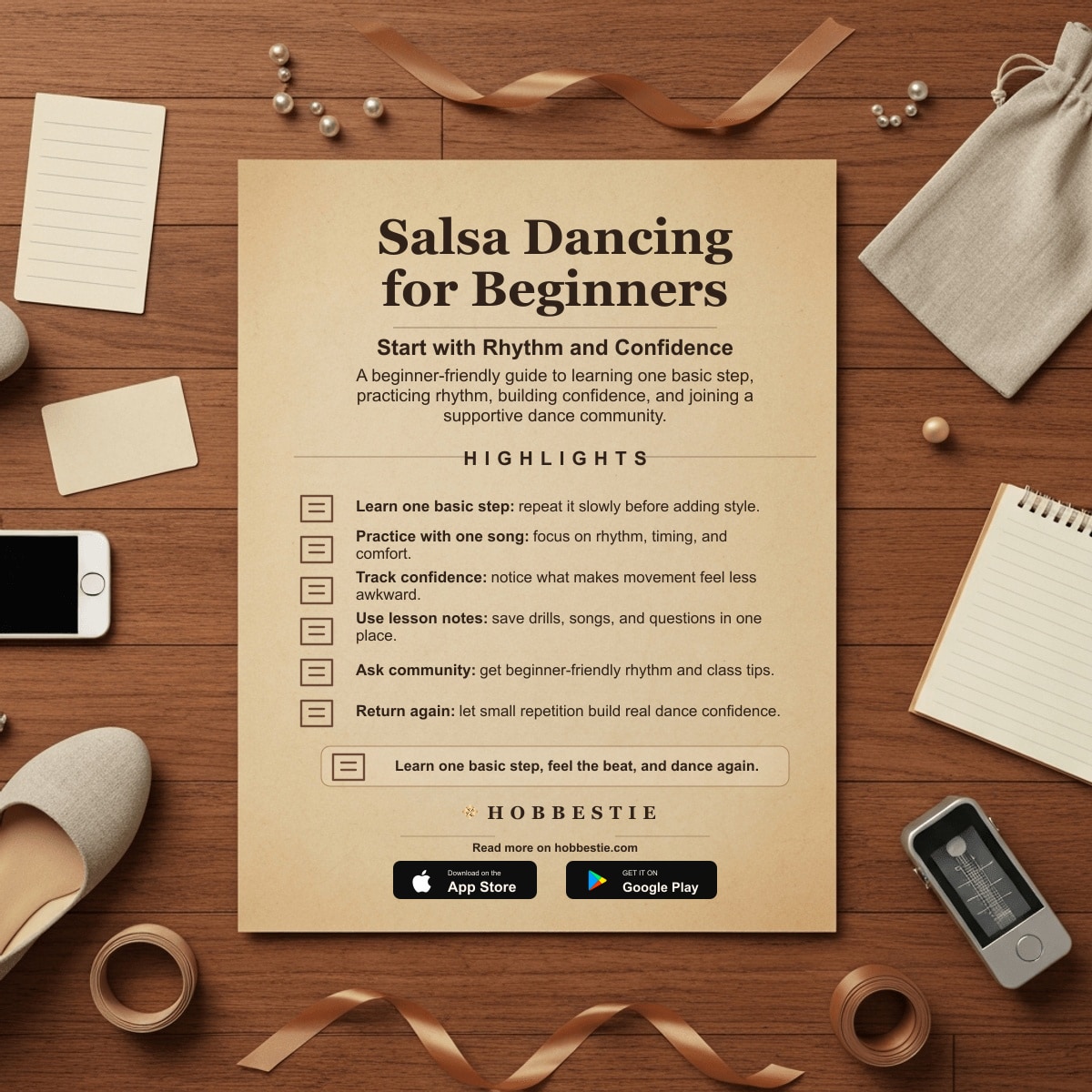
A salsa dancing for beginners guide should help you feel the rhythm before it asks you to look polished. The best first step is small: learn one basic step pattern, repeat it slowly, and practice it through one song without judging how it looks. That gives your body a clear starting point and your mind a reason to relax. Hobbestie is built for this kind of beginner moment because it connects digital lessons, practice trackers, and community support, so you can start with confidence instead of embarrassment.
Why Salsa Dancing Works as a Beginner Hobby
Start with timing before style
Salsa can look difficult because experienced dancers move with speed, musicality, and flair. Beginners do not need all of that at once. The first win is timing. If you can hear the beat, count slowly, and return to the basic step, you already have something to build on.
Longer evenings, social events, weddings, travel days, and weekend classes make salsa feel especially inviting. It is a hobby that can live in your room, in a class, at an event, or in a community group. The goal is not to perform immediately. The goal is to feel less frozen when the music starts.
Keep the first practice private and friendly
Many people avoid dance because they imagine being watched. Your first practice does not need an audience. Use a short beginner lesson, clear a small space, and repeat the same step until it feels less strange. Confidence grows when the movement becomes familiar.
A simple beginner filter helps: can you practice the next step for one song? If yes, it is small enough. If not, slow it down. Salsa becomes more approachable when you treat it as rhythm practice first and performance second.
Build a Seven-Day Starter Routine
Use one basic rhythm loop
Your first week should create comfort, not pressure. Try this rhythm: day one, watch one basic step lesson. Day two, practice counting. Day three, move through one song slowly. Day four, save one note about what felt awkward. Day five, ask one beginner question. Day six, repeat the easiest drill. Day seven, decide what helped.
For salsa dancing, a useful weekly loop is to practice timing for ten minutes, save one lesson note, and ask one community question about rhythm. You are not trying to learn every turn pattern. You are teaching your body to return to the beat.
Track confidence, not only steps
Dance progress is not only technical. Track what helped you feel less tense. Did counting help? Did clapping help? Did slowing the music down help? Did a certain explanation make the basic step clearer? Those notes are useful because beginners often forget what unlocked the first layer of confidence.
A digital practice tracker can hold lesson links, song ideas, timing notes, questions, and small wins. Over time, it becomes your personal dance map.
Make the second practice feel lighter
The real beginner milestone is not the first practice. It is returning for the second one. Keep the same song, repeat the same basic step, and notice what feels slightly easier. This helps you build trust with your own body. Small repetition is what turns salsa from something intimidating into something familiar.
A gentle rule helps: do not measure a dance practice only by how good it looked. Measure whether you showed up, heard the beat a little sooner, and felt less afraid to try again. Those signs matter because they keep the hobby emotionally sustainable.
Use Digital Resources Without Overcollecting
Choose resources that move you into action
Digital resources should make practice easier. Start with one or two supports: a practice tracker, lesson notes template, rhythm checklist, beginner video course, or confidence journal. A short lesson gives sequence. A tracker shows consistency. A checklist keeps your focus on the basics.
Avoid saving too many dance videos before you practice. The better order is watch, move, record, ask, and repeat. Once you know whether your challenge is timing, coordination, confidence, or memory, you can choose better resources.
Let community make the awkward stage normal
The fastest way to feel less alone is to ask a focused beginner question. Try: "What helped you feel the beat more clearly: counting, clapping, or moving slowly?" That question invites practical answers and makes the beginner stage feel normal.
On Hobbestie, community matters because hobbies are not only about information. They are about belonging and momentum. When you see someone else talk honestly about awkward first steps, your own practice feels less embarrassing.
Turn Practice Into Something Useful
Save your beginner process
As you learn, pay attention to the explanations that finally made sense. Those notes can help another beginner. You might create a beginner salsa practice tracker, a short confidence-building lesson plan, a rhythm checklist, or a simple guide to surviving the first class.
You do not need to monetize immediately. First, make your learning process clear enough that another person could follow it. A beginner who documents honestly can create resources that feel friendly and realistic.
Keep the first offer small
If you eventually want to share or sell a digital resource, keep the first version narrow. Help someone practice one rhythm, prepare for one first class, or understand one common beginner mistake. A focused resource is easier to finish and easier for another beginner to trust.
Hobbestie supports that path by connecting hobbies, communities, online courses, templates, and digital products in one place. You can begin as a learner, participate as a community member, and later package what you know into something helpful.
Your Next Step
Start salsa dancing with one basic step, one short practice song, one digital tracker, and one community question. Give yourself seven days before judging your ability. If the routine gives you energy, connection, courage, or joy, keep building.
Ready to begin? Join Hobbestie to find beginner-friendly communities, online courses, templates, downloadable guides, and digital resources that help your next hobby become easier to start and easier to sustain.