Summer Hobby Reset for Beginners: Build Your Creative Routine
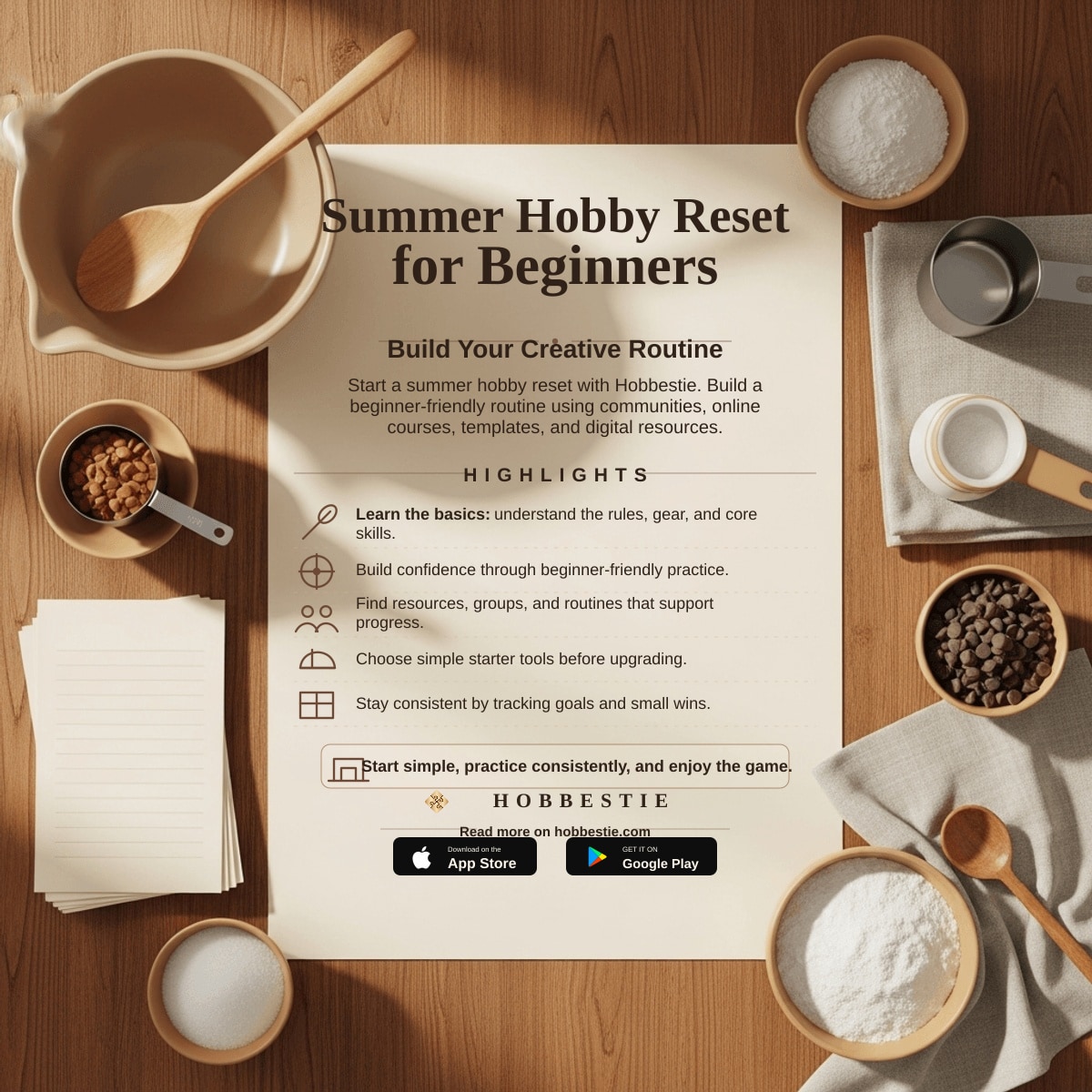
A summer hobby reset for beginners is a simple way to turn curiosity into a repeatable creative routine. You do not need a perfect plan, a large budget, or a dramatic life change. You need one clear hobby direction, one small weekly rhythm, and a supportive place to learn with other people. Hobbestie is built for that kind of start: community first, beginner-friendly, and focused on digital resources that help you learn without pressure.
Why a Summer Hobby Reset Works
Seasonal energy makes starting easier
Summer naturally gives people more social energy, longer days, and a stronger desire to try something fresh. That makes it a useful season for testing a new interest. Instead of forcing yourself into a complicated self-improvement project, think of your hobby reset as a lightweight experiment. You are not trying to become an expert immediately. You are giving yourself permission to explore, practice, and notice what makes you feel more alive.
A good hobby reset also helps you break passive scrolling patterns. Many people spend hours watching creative people online, but never move from inspiration into action. The goal is not to quit digital life. The goal is to use digital spaces better. Online courses, downloadable guides, community prompts, and video tutorials can become bridges from watching into doing.
Beginners need structure, not pressure
Most beginners fail because their first plan is too broad. They say they want to start painting, journaling, photography, cooking, fitness, language learning, or content creation, but they never define the first step. A better plan is specific and small. For example, choose one skill theme for seven days: color mixing, morning journaling, beginner photo composition, simple recipe planning, or basic mobility practice.
That structure keeps your brain from treating the hobby as another stressful responsibility. You only need a repeatable entry point. A short tutorial, a digital checklist, a beginner template, or a weekly Hobbestie community prompt is enough to begin.
Choose One Hobby Lane First
Pick based on your real energy
The best beginner hobby is not always the trendiest one. It is the one that matches your current energy. If you feel overstimulated, choose a calming hobby like journaling, sketching, nature observation, reading, or gentle yoga. If you feel isolated, choose something with visible sharing potential, such as photography, cooking, digital art, music practice, or creative writing. If you want momentum, choose a hobby with clear progress markers, like language learning, fitness training, calligraphy, or beginner design.
Use a simple filter: do you want calm, connection, confidence, or income potential? Calm hobbies help you regulate your mind. Connection hobbies help you meet people. Confidence hobbies help you build skill. Income-potential hobbies can later become digital products, tutorials, templates, or services.
Avoid the all-at-once trap
Trying five new hobbies at the same time feels exciting for two days and exhausting by the end of the week. A stronger approach is to select one main lane and one backup lane. Your main lane gets most of your attention. Your backup lane is only there for low-energy days. For example, your main lane might be watercolor practice, while your backup lane is a five-minute reflection journal.
This matters because consistency grows from reducing decisions. When the decision is already made, it is easier to show up. Hobbestie communities can help by giving you a place to post progress, ask beginner questions, and see realistic examples from other hobbyists.
Build a Seven-Day Beginner Routine
Start with a tiny daily action
A beginner routine should be almost too easy. Day one can be choosing your hobby lane and saving one digital guide. Day two can be watching a short video tutorial. Day three can be doing a ten-minute practice. Day four can be sharing one note or photo with a community. Day five can be repeating the easiest exercise. Day six can be reviewing what felt good. Day seven can be choosing whether to continue, adjust, or try a related hobby.
This rhythm works because it protects you from perfectionism. You are not demanding a flawless result. You are building evidence that you can return to a creative activity multiple times. That evidence is what turns a hobby from a random idea into part of your identity.
Use digital resources intentionally
Digital resources are powerful when they reduce friction. A downloadable tracker can remind you what to practice. A digital template can give shape to a blank page. An online course can sequence lessons so you do not have to guess what comes next. A video tutorial can show technique more clearly than text. A community membership can keep you accountable when motivation dips.
The key is to choose resources that support action. Do not collect twenty resources before starting. Choose one digital guide, one beginner tutorial, and one community space. Then practice before adding more.
Turn Community Into Momentum
Share progress before you feel ready
Many people wait until they are good before joining a community. That delays the most useful part of learning. A beginner-friendly community is not just a showcase. It is a support system. You can ask what to practice next, compare approaches, learn from mistakes, and receive encouragement when your first attempts look messy.
On Hobbestie, the community layer matters because hobbies are not only about skill. They are also about belonging. When you see other beginners learning in public, your own start feels less intimidating. You stop treating imperfection as proof that you should quit.
Use prompts to remove blank-page anxiety
Prompts are one of the easiest ways to keep momentum. A journaling prompt, photo challenge, sketch theme, recipe idea, language practice sentence, or weekly reflection question can remove the pressure of inventing everything yourself. Prompts also make community participation easier because everyone can respond to the same theme in their own style.
If you want to build consistency, save a small set of prompts and rotate through them. This creates a familiar rhythm while still leaving room for creativity.
Connect Hobbies to Opportunity
Notice what people ask you about
A hobby can become an opportunity when other people repeatedly ask how you did something. They may ask for your checklist, your template, your editing process, your practice routine, your beginner notes, or your resource list. Those questions are signals. They show where your learning could become helpful to someone else.
You do not need to monetize immediately. First, document your process. Turn your steps into a simple digital checklist, mini guide, tutorial outline, or beginner-friendly template. Over time, those small assets can become digital products or services.
Keep the first offer simple
The best first digital offer is usually small and practical. Think of a printable planner, a beginner workbook, a Notion-style tracker, a video lesson, a prompt pack, a mini e-book, a photo preset, a digital pattern, or a community workshop. The value is not in making it huge. The value is in helping someone get from confused to started.
Hobbestie marketplace is designed around that idea: helping hobbyists turn practical knowledge into digital resources that other people can use. Start with what you have learned recently, then package it clearly.
Your Next Step
A summer hobby reset for beginners should feel doable today. Choose one hobby lane, one tiny action, one digital resource, and one community space. Practice for seven days before judging the result. If the hobby gives you calm, connection, confidence, or opportunity, keep going.
Ready to begin? Join Hobbestie to find hobby communities, online courses, downloadable guides, templates, virtual workshops, and beginner-friendly digital resources that help you turn curiosity into real creative momentum.